How To Do Romanian Deadlifts + Programming Tips
Автор: Barbell Logic
Загружено: 2019-06-14
Просмотров: 159061
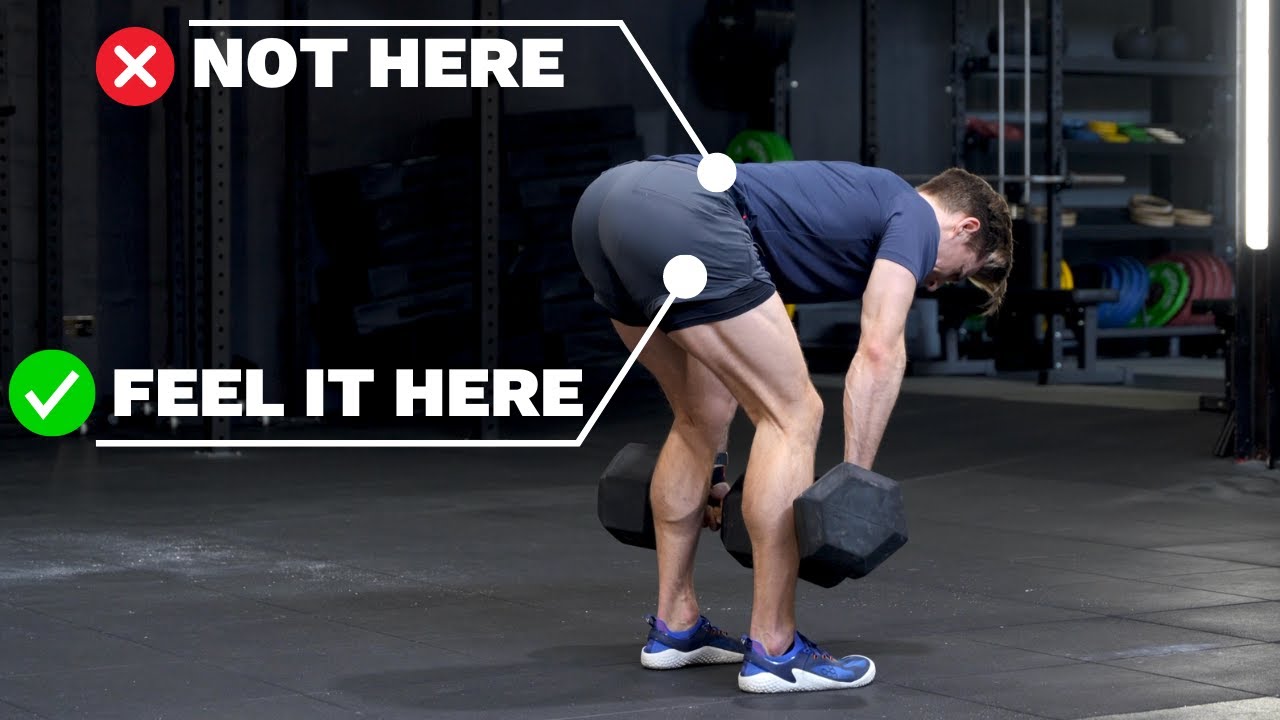
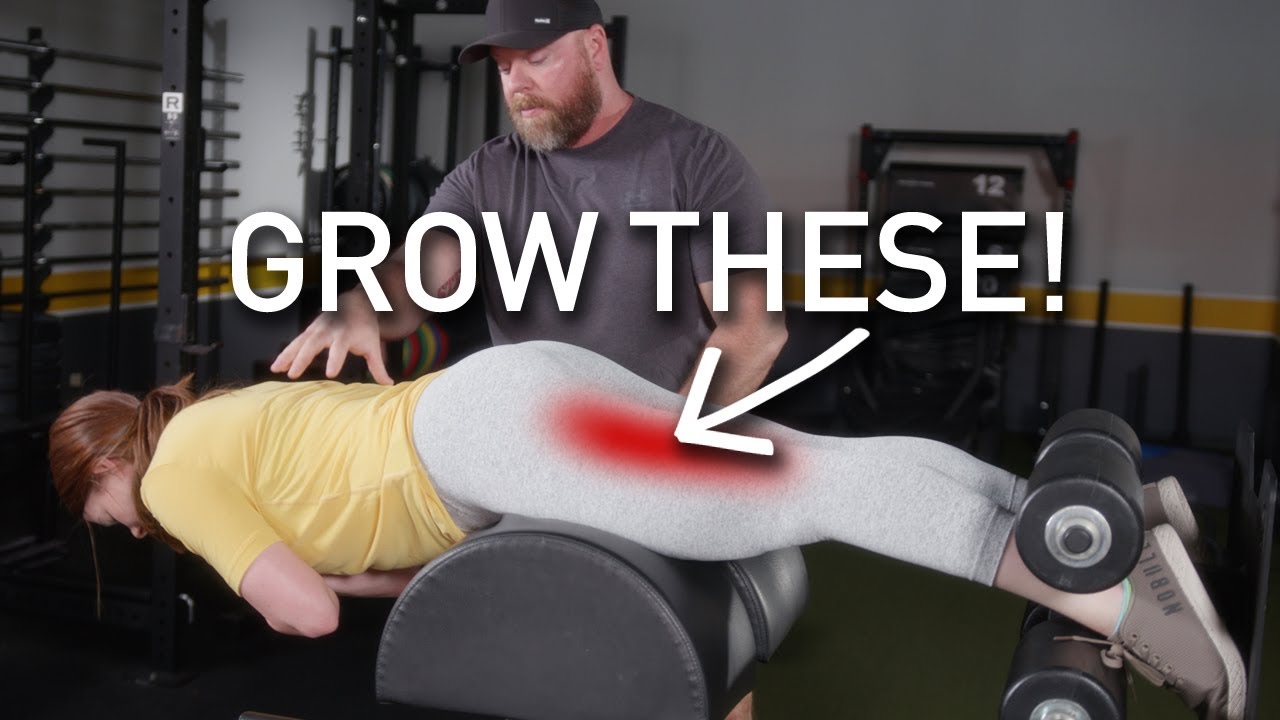
Learn how to Romanian Deadlift (RDL) to grow your hamstrings, glutes, and hip extensors and rehab & strengthen your lower back. Compared to the full deadlift, it involves much less knee extension (stress the quadriceps less).
A conventional deadlift starts from a dead stop—that’s how it gets its name—from the floor. The Romanian deadlift starts from the rack at about the height of your midthigh. You take the bar out of the rack, step back, unlock your knees slightly, and bend at the hips to slide the bar down your legs. The range of motion will depend on the lifter’s ability to maintain a rigid back without bending the knees. At some point, the hamstrings reach their full extension. Going farther down will require either bending the knees or flexing the lower back, neither of which should be allowed. From the bottom, the lifter will slide the bar back up the legs and return to the starting position. At no point during the RDL does the lifter set the bar down.
-Start from the rack: set the bar between the top of your knee & mid-thigh
-Make sure the space around the rack si clear
-Take a standard deadlift grip
-Instead of a hook grip or mixed grip, use straps for the Romanian deadlift
-Take a deadlift stance, set your back, and lift the bar out of the rack
-Take 2 steps back to clear the rack & assume a deadlift stance: feet directly under your hips, toes pointed slightly outward
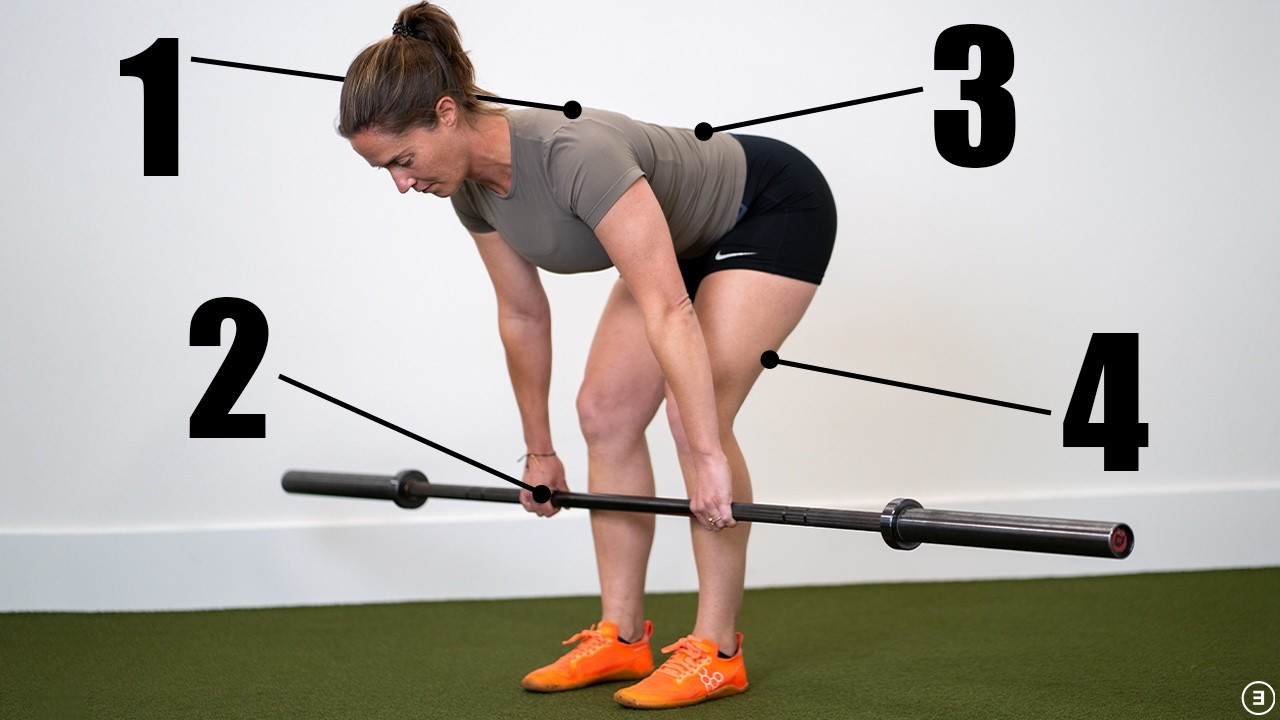
-Send your hips back & slide the bar down your legs
-Think "hinge" at the hips while maintaining the slight knee bend & without unlocking your back or rounding your shoulders
-When your hamstrings are fully stretched, squeeze your glutes & fire back up to the starting position
Useful Cues:
-FREEZE YOUR KNEES as you slide the bar down your legs
-Stick your butt out & ACTIVELY SQUEEZE your lower back
-Keep your CHEST UP like you are trying to aim it at the wall in front of you
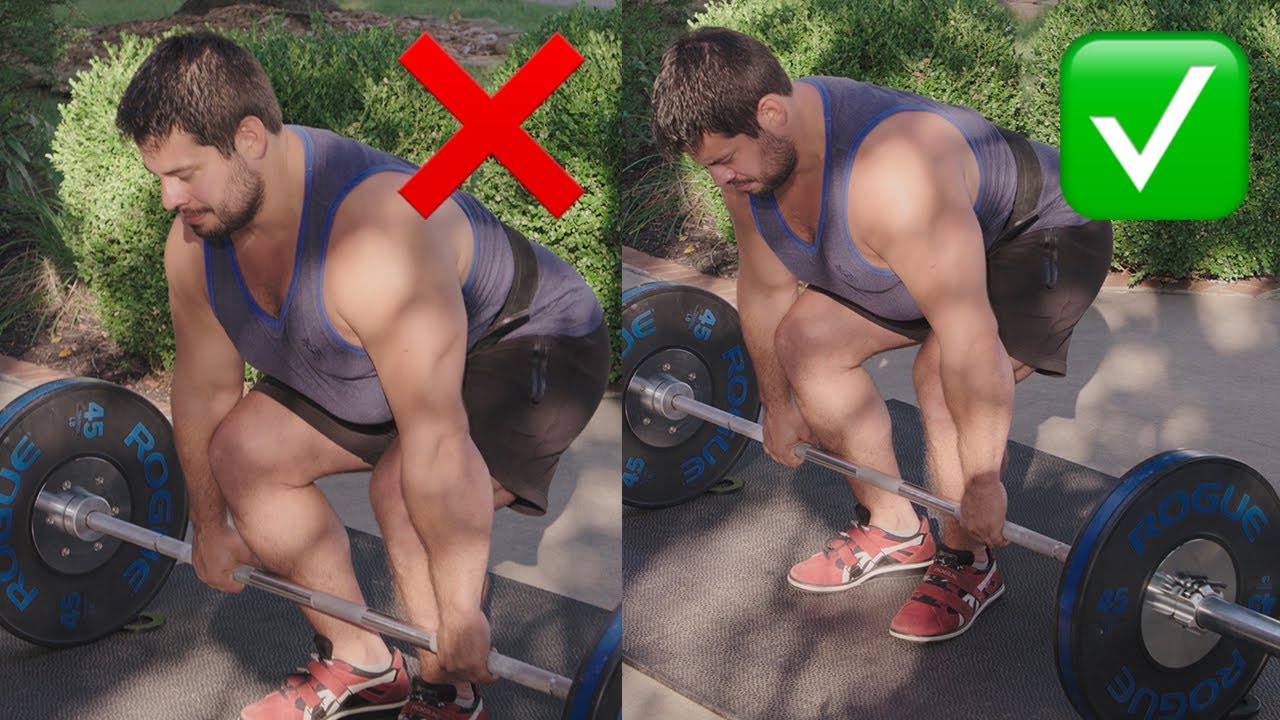
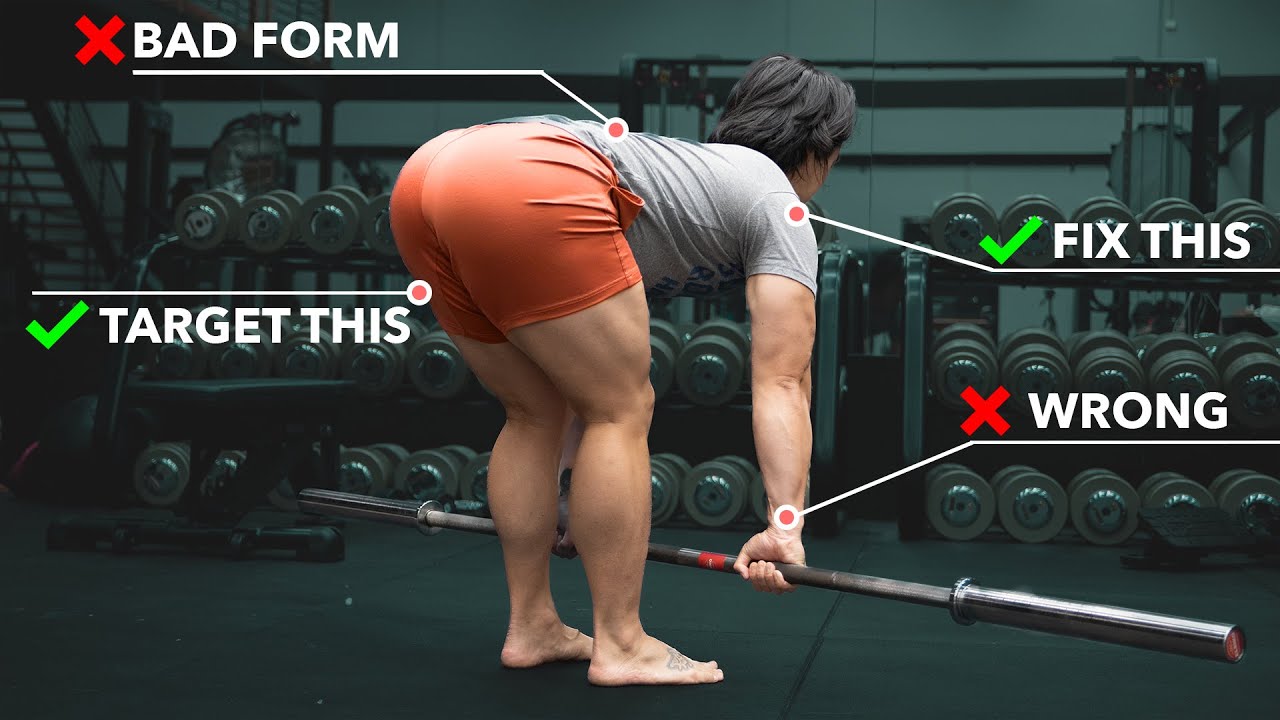
The two most common errors in the RDL are (1) bending your knees during the descent and (2) unlocking or rounding your back. Both of these errors come from the lifter’s attempt to force a bigger range of motion than the hamstrings are keen to allow.
The bottom of the RDL is extremely tight for the hamstrings. Some people believe that they should reach a certain point on their shin or close to the ground. The RDL is different from, say, the squat, which has a clearly defined range of motion to be considered valid. The range of motion for the RDL is defined by hamstring extensibility.
Your knees should be unlocked at the top but not by much. Think of a “soft bend” in your knees. Once slightly unlocked, your knees should not move until you are ready to re-rack the bar. If, as you descend, you bend your knees, you will be able to reach farther down, but you will be taking the focus off your hip extensors, which is the point of the lift.
Similarly, as you reach the bottom of the lift, assuming your knees aren’t bending, your hamstrings and back should be very tight. If you continue to descend, and you suddenly feel relief in those areas, then you have unlocked your back. Both of these errors can be difficult to identify while you are lifting. Remember that tightness trumps range of motion for this lift.
Not a form error, but often a mistake, is the failure to use straps on this lift. Having to unrack the bar, walk it out of the rack, perform an entire set, and walk it back into the rack can only be done at relatively light loads without straps. Sets of RDLs will punish your thumbs if you hook grip and should not be performed with a mixed grip.
SUBSCRIBE: https://bit.ly/2N20cLZ
----------------------------------------------------------------
This is Barbell Logic, where we believe that health and fitness should be approached with simplicity, logic and reason.
We focus on strength, health & longevity. Our goal is to present strength & fitness in a systematic logical progression. This channel aims to be a breath of fresh air in the fitness industry. Our teaching methods and programming for strength are simple, hard and effective.
We will cover topics under the umbrellas of barbell training, conditioning and nutrition. We'll show you that barbell training is for everybody.
WATCH MORE BARBELL LOGIC VIDEOS: https://bit.ly/2N8jwZ1
Join us for a lifetime of success under the bar. This is the foundation of our journey together.
Barbell Logic on Instagram: / barbell_logic
Barbell Logic on Facebook: / barbelllogic. .
Listen to our podcast: https://bit.ly/2Kgi09b
Visit our website: https://barbell-logic.com/
0:00 Why Do Them?
1:18 Differences with Regular Deadlift
2:21 Proper Form
3:17 Range of Motion
4:16 More Technique Tips
5:00 Programming + Low Back Rehab & Extension --------------
Get Matched with a Professional Strength Coach today for FREE!
No contract with us, just commitment to yourself: Start experiencing strength now: https://www.barbell-logic.com/match

Доступные форматы для скачивания:
Скачать видео mp4
-
Информация по загрузке: