Building Overheating - Building Regulations Document O
Автор: Building Regulations Copilot
Загружено: 2025-12-14
Просмотров: 7
Approved Document O (ADO) is a mandatory, non-negotiable standard designed to ensure new homes in England remain safe and liveable as temperatures rise.
This regulation completely reshapes the design process for architects and developers, moving overheating from a "nice to have" consideration to a legal requirement.
The Core Philosophy: Passive First
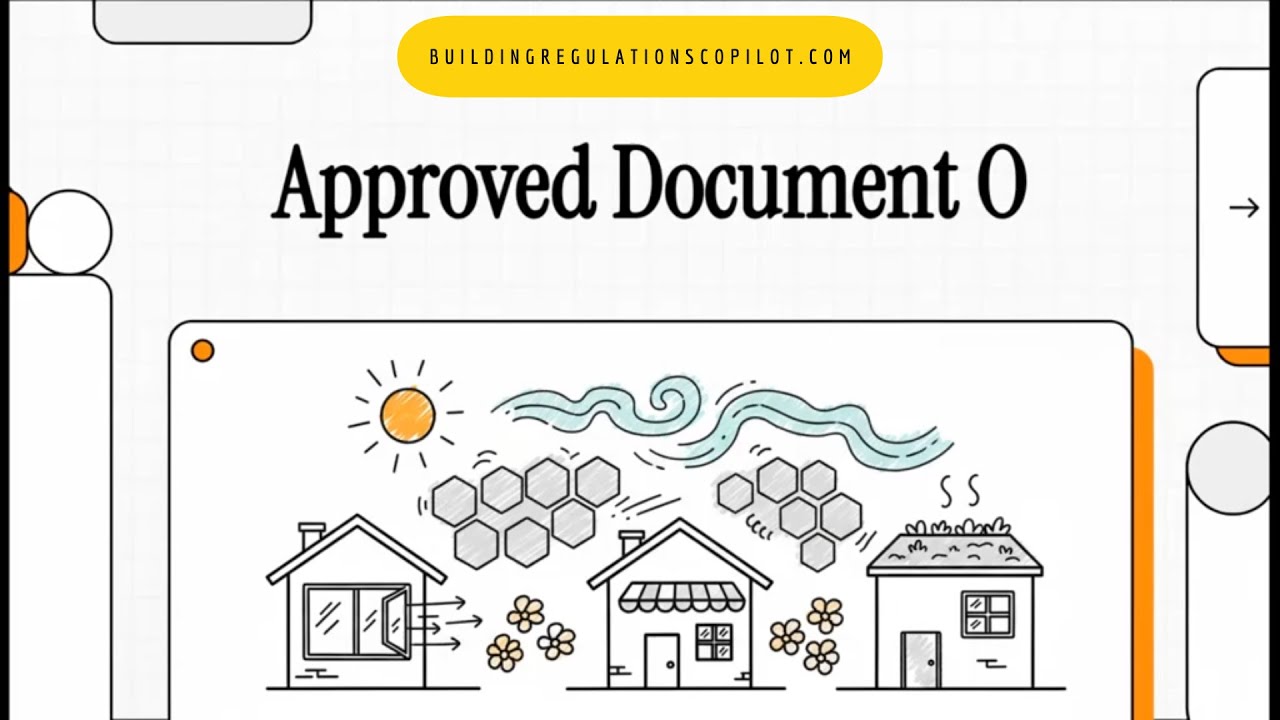
The mission of ADO is twofold: stop the sun from baking the building in the summer and provide effective ways to remove heat that does build up.
Crucially, designers must prioritize passive solutions such as smart window design, natural airflow, and shading.
Air conditioning is treated as an absolute last resort, only permissible if it is proven that no other solution will work.
Two Paths to Compliance
To prove a design meets these standards, developers can choose between two methods:
• The Simplified Method: Often described as a "recipe book," this approach provides a strict set of rules to follow. Compliance depends on the building’s location (categorized as high or moderate risk) and whether it has cross ventilation.
• Dynamic Thermal Modelling (DTM): This flexible but complex route uses software to create a "digital twin" of the building to simulate and prove it will not overheat.
The Simplified Method Rules
For those using the simplified "recipe book" approach, the rules strictly limit the amount of glass allowed.
For example, a south-facing wall in a high-risk area like London may be limited to just 11% of its floor area as glass, whereas a north-facing wall in a moderate-risk area might allow 18%.
In high-risk locations, shading is mandatory, requiring features like external shutters, overhangs, or high-performance glass with a low G-value.
Real-World Roadblocks and the "40 dB Tripwire"
A design that looks perfect on a spreadsheet can still fail if it isn't practical for real-world occupants. ADO considers:
• Noise Limits: This is a major hurdle for urban projects; the average noise level inside a bedroom at night cannot exceed 40 dB (about the volume of a quiet library) with windows open for cooling. If a noise survey shows it is louder than this, you cannot use those windows in your cooling strategy, often forcing the project toward the more expensive DTM route.
• Security and Safety: Strategies must account for ground-floor security and physical safety. If large, low-level windows are used for ventilation near a drop, guarding at least 1.1 meters high is required, which can significantly alter the interior feel.
Ultimately, complying with Approved Document O is a sophisticated balancing act between providing beautiful, light-filled spaces and protecting residents from the sun.
Analogy for Understanding:
Think of Approved Document O as a "Thermostat for Architecture."
In the past, we designed houses like glass jars that could easily turn into ovens.
ADO acts as a mandatory set of design "dials" - limiting glass, adding "sunglasses" (shading), and ensuring the building can "breathe" (ventilation) - to ensure the internal temperature stays comfortable without having to plug in an expensive, energy-hungry air conditioner.
--------------------------------------------------------------------------------
Visit and subscribe to the Building Regulations Copilot YouTube channel for more technical deep dives into building regulations. For specific project queries, visit us at buildingregulationscopilot.com.
--------------------------------------------------------------------------------
For more videos like this please visit the Building Regulations Copilot YouTube channel @BuildingRegulationsCopilot
Visit https://buildingregulationscopilot.com for 24/7 responses to multi-country building regulations related queries.
--------------------------------------------------------------------------------
Доступные форматы для скачивания:
Скачать видео mp4
-
Информация по загрузке: