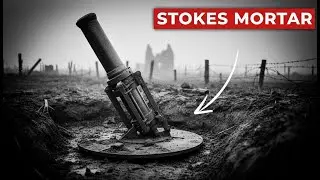
Why This 32-Year-Old British Sergeant Charged 3 Machine Gun Nests Alone While His Company Watched
Автор: Unseen Comrades
Загружено: 2026-01-05
Просмотров: 54
September 27, 1918, Canal du Nord, France. Acting Company Sergeant Major John Robert Osborn Cridland, 1st Battalion Coldstream Guards, crouched in the forward trenches as British First and Third Armies prepared to assault the Hindenburg Line. At 32 years old—ancient by Western Front standards—Cridland was a four-year veteran who'd survived the Somme, Bourlon Wood, and Passchendaele. Tomorrow's objective was brutal: cross the Canal du Nord under fire, breach 30 yards of barbed wire, and seize Graincourt village from veteran German defenders.
At 0520 hours, hundreds of British guns opened fire. The Guards charged. Within minutes, German MG08 machine guns—firing 500 rounds per minute from concrete pillboxes—shredded the advance. Men fell by the dozens. Lieutenant Geoffrey Chambers, the company commander, was killed instantly. The attack stalled 100 yards from the German wire, pinned down by interlocking fields of fire that turned the open ground into a killing zone.
Company Sergeant Major Cridland rose from cover and charged alone.
For eight minutes, Cridland systematically destroyed three German machine gun positions by himself. He crossed 40 yards of open ground under direct fire, bayoneted the first crew, captured their weapon, and kept moving. The second position surrendered when he appeared through the smoke—30 German soldiers threw down their weapons facing one British sergeant who refused to stop. At the third position, he silenced a field gun firing over open sights by shooting the crew with his Lee-Enfield rifle at point-blank range, killing eight men before the survivors abandoned the gun.
The German officers who witnessed the assault through binoculars couldn't comprehend what they'd seen. One NCO had broken three fortified positions and forced the surrender of an entire platoon. German after-action reports described the attack as "impossible" and attributed it to a coordinated company assault—they refused to believe one sergeant had accomplished it alone.
But British witnesses confirmed every detail. Corporal James Whitmore, pinned down during the assault, later wrote: "The Sergeant Major come through like something from the old stories. He weren't afraid of nothing. When he called for us to follow, we would've charged Hell itself behind him."
Cridland's solo assault saved the entire advance. The breakthrough at Canal du Nord collapsed German defenses across the sector and led directly to the Allied victory in the Hundred Days Offensive. King George V personally awarded Cridland the Victoria Cross on February 26, 1919, at Buckingham Palace. The citation stated: "His action contributed largely to the success of the attack"—British military understatement for an eight-minute charge that changed the course of a battle.
Then something extraordinary happened: Cridland disappeared from public memory while his story became foundational to military leadership training. He returned to peacetime service, refused interviews, declined public speaking opportunities, and worked as a Regimental Sergeant Major until retirement in 1932. He married, raised three children in Exeter, and died quietly in 1953 at age 62. Most British citizens under 30 had never heard his name by 1955.
But within the British Army, his story never faded. The Coldstream Guards taught every new NCO "Cridland's action" as the gold standard for battlefield initiative. In 1981, Lieutenant Colonel James Willoughby discovered Cridland's after-action reports and tactical diagrams in the Regimental Archives—documents so detailed they showed exactly how he'd assessed German positions and planned his sequential assaults. Willoughby incorporated the case study into Royal Military Academy Sandhurst's curriculum as "Exercise CANAL."
When British forces deployed to Helmand Province, Afghanistan in 2009, the battalion commander briefed every NCO on Cridland's story before departure—recognizing that counterinsurgency operations would regularly place sergeants in situations demanding exactly the independent action Cridland demonstrated.
His Victoria Cross rests in the Guards Chapel at Wellington Barracks, London. His grave at Hither Green Cemetery receives a wreath from the Coldstream Guards every September 27th. And his story continues shaping how modern armies train leaders to make life-or-death decisions when all authority has collapsed and someone must act.
This is the complete story of the British sergeant who charged three machine gun nests alone in 1918, disappeared into obscurity for 60 years, and emerged as the foundation for how every Western military teaches leadership under fire.
Unseen Comrades brings you Medal of Honor and Victoria Cross stories. Subscribe for forgotten heroes who changed military history.

Доступные форматы для скачивания:
Скачать видео mp4
-
Информация по загрузке: