NEET PG- Nervous System Fundamentals Quiz WITH DR SHEEN
Автор: Dr Sheen Medical lectures
Загружено: 2026-01-13
Просмотров: 4
The nervous system is the main control and communication system of the body. It allows us to sense the environment, think, remember, and respond appropriately. Every minute, it receives a huge amount of information from sensory receptors present in the skin, eyes, ears, and internal organs. This information is processed to decide suitable responses.
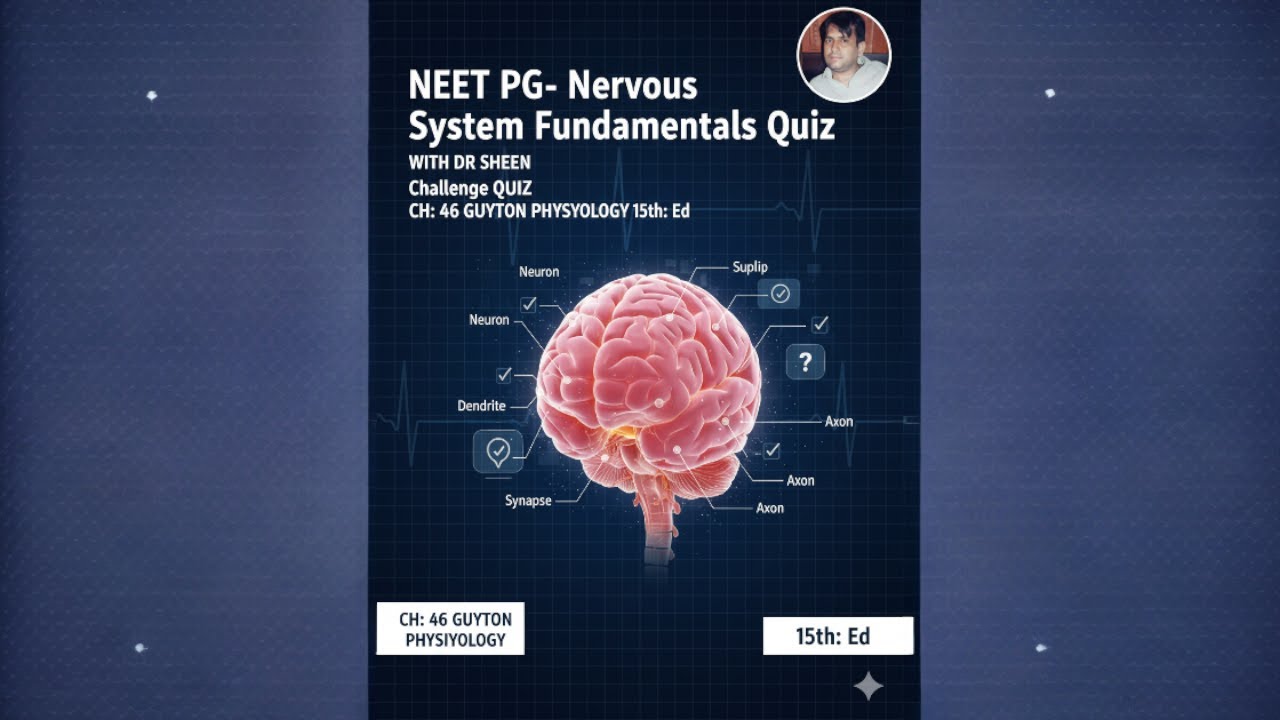
The basic functional unit of the nervous system is the neuron. A neuron receives signals through dendrites and the cell body and sends signals through a single axon. Neurons are connected to each other at junctions called synapses. Synapses play a key role in deciding whether a signal will be transmitted, blocked, amplified, or redirected. They ensure that nerve signals travel in a specific direction and help in information processing and memory formation.
The nervous system has three main functions: sensory input, integration, and motor output. Sensory input occurs when receptors detect stimuli and send signals to the central nervous system. Integration is the processing and interpretation of this information, where most sensory inputs are filtered out as unimportant. Motor output is the response, which occurs through muscles and glands called effectors.
Functionally, the central nervous system works at three major levels.
The spinal cord level controls fast and automatic actions such as withdrawal from pain, posture maintenance, and walking movements. These actions can occur even without brain involvement.
The lower brain level includes structures like the medulla, pons, cerebellum, hypothalamus, and basal ganglia. These areas control vital and subconscious activities such as breathing, blood pressure, balance, emotions, and feeding reflexes.
The higher brain level is the cerebral cortex. It is responsible for thinking, learning, decision-making, and storing large amounts of memory. The cortex works together with lower centers to produce precise and meaningful responses.
Memory is formed through repeated activation of synapses, a process known as facilitation. Stored memories help the brain compare new experiences with past ones and guide future actions.
Overall, the nervous system works like a highly advanced computer, continuously collecting information, processing it using stored data, and producing appropriate responses to maintain normal body function and behavior.
Доступные форматы для скачивания:
Скачать видео mp4
-
Информация по загрузке: