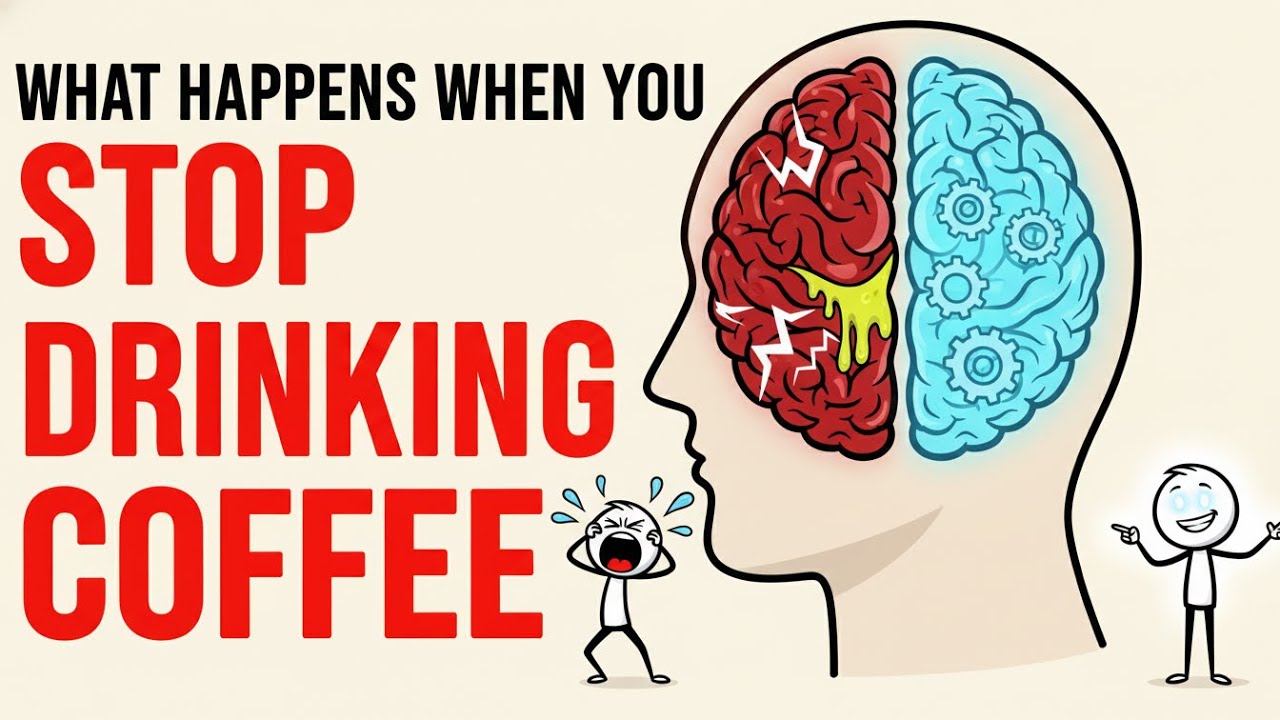
What Happens To Your Body When You Stop Drinking Coffee | Science Explained
Автор: Healthy Stickman Science
Загружено: 2025-12-15
Просмотров: 853
What Happens To Your Body When You Stop Drinking Coffee | Science Explained
In this Science Explained video, we explore what happens to your body when you stop drinking coffee and how caffeine withdrawal affects the brain, metabolism, and nervous system. This video breaks down the science behind caffeine dependence and the physiological changes that occur when coffee is removed from your daily routine.
Caffeine directly influences adenosine signaling, stress hormones, blood pressure, and energy regulation. When you stop drinking coffee, your body begins to rebalance these systems. We explain why headaches, fatigue, and mood changes may appear in the first days, and how sleep quality, hydration, and nervous system stability can improve over time.
Discover:
• How caffeine affects the brain and nervous system
• What happens during caffeine withdrawal
• Why headaches and fatigue occur after quitting coffee
• Changes in sleep quality and energy regulation
• How stopping coffee affects stress hormones and blood pressure
• What science says about long-term caffeine reduction
Understanding how coffee and caffeine affect your body can help you make informed decisions about consumption and overall health.
📚 Sources:
Griffiths, R.R., Juliano, L.M., & Chait, L.D. (2004). Caffeine Withdrawal: A Parametric Analysis of Caffeine Dosing Conditions. Journal of Pharmacology and Experimental Therapeutics, 310(3), 1233-1241.
Griffiths, R.R., & Woodson, P.P. (1988). Caffeine Physical Dependence: A Review of Human and Laboratory Animal Studies. Psychopharmacology, 94(4), 437-451.
Xie, L., Kang, H., Xu, Q., Chen, M.J., Liao, Y., Thiyagarajan, M., ... & Nedergaard, M. (2013). Sleep Drives Metabolite Clearance from the Adult Brain. Science, 342(6156), 373-377.
Clark, I., & Landolt, H.P. (2017). Coffee, Caffeine, and Sleep: A Systematic Review of Epidemiological Studies and Randomized Controlled Trials. Sleep Medicine Reviews, 31, 70-78.
Lovallo, W.R., Whitsett, T.L., al'Absi, M., Sung, B.H., Vincent, A.S., & Wilson, M.F. (2005). Caffeine Stimulation of Cortisol Secretion Across the Waking Hours in Relation to Caffeine Intake Levels. Psychosomatic Medicine, 67(5), 734-739.
Lovallo, W.R., Farag, N.H., Vincent, A.S., Thomas, T.L., & Wilson, M.F. (2006). Cortisol Responses to Mental Stress, Exercise, and Meals Following Caffeine Intake in Men and Women. Pharmacology Biochemistry and Behavior, 83(1), 441-447.
Volkow, N.D., Wang, G.J., Logan, J., Alexoff, D., Fowler, J.S., Thanos, P.K., ... & Tomasi, D. (2015). Caffeine Increases Striatal Dopamine D2/D3 Receptor Availability in the Human Brain. Translational Psychiatry, 5(4), e549.
Lara, D.R. (2010). Caffeine, Mental Health, and Psychiatric Disorders. Journal of Alzheimer's Disease, 20(Suppl 1), S239-S248.
🔔 Like, subscribe, and share to help others understand how caffeine impacts the body through real science.
💬 Comment below: Have you ever tried stopping coffee? What did you notice?
#scienceexplains #kidney #fasting #healthscience explains #health #HealthyScienceStickman
Доступные форматы для скачивания:
Скачать видео mp4
-
Информация по загрузке: